04, Strategy
Enterprise governance
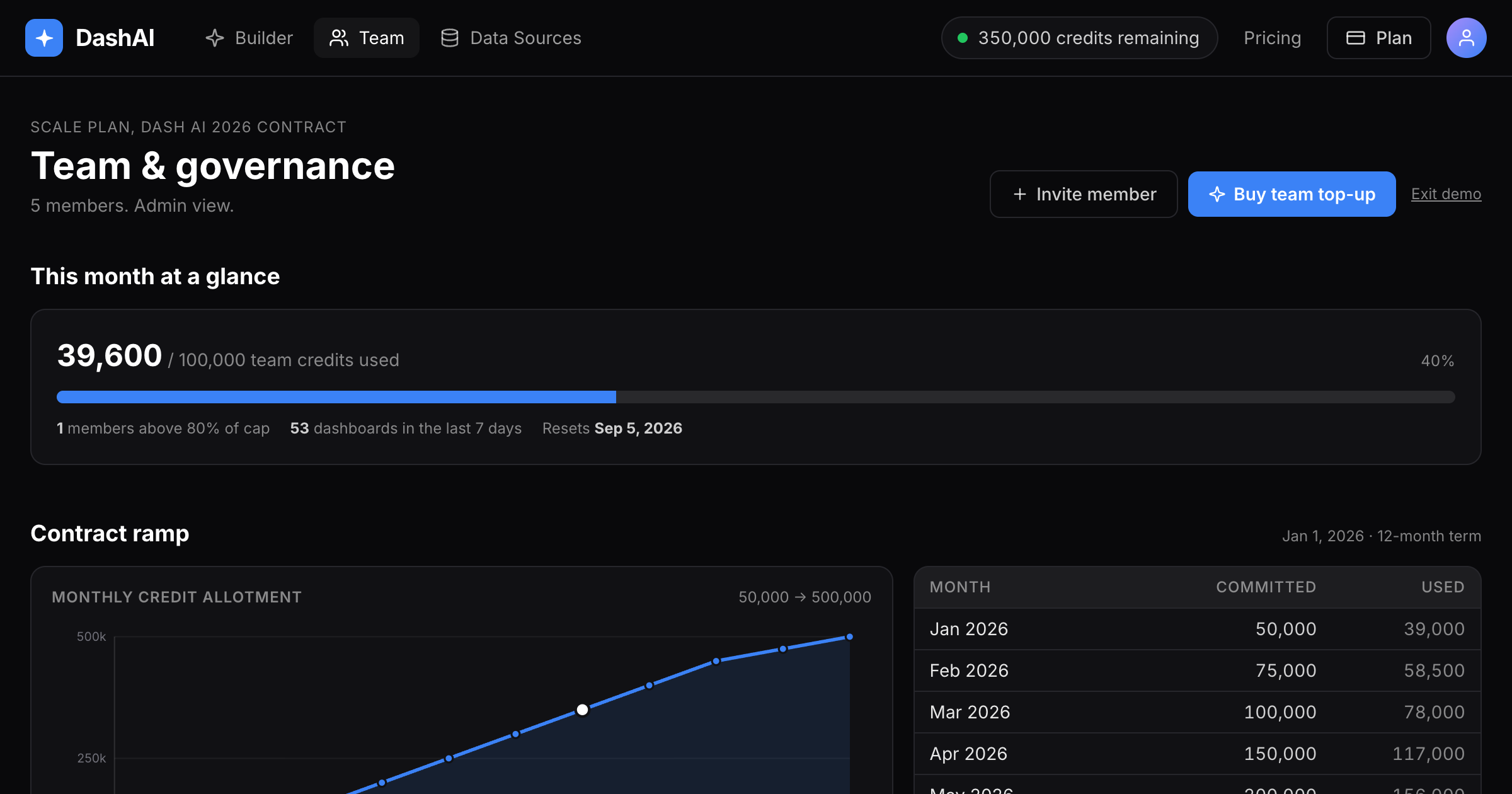
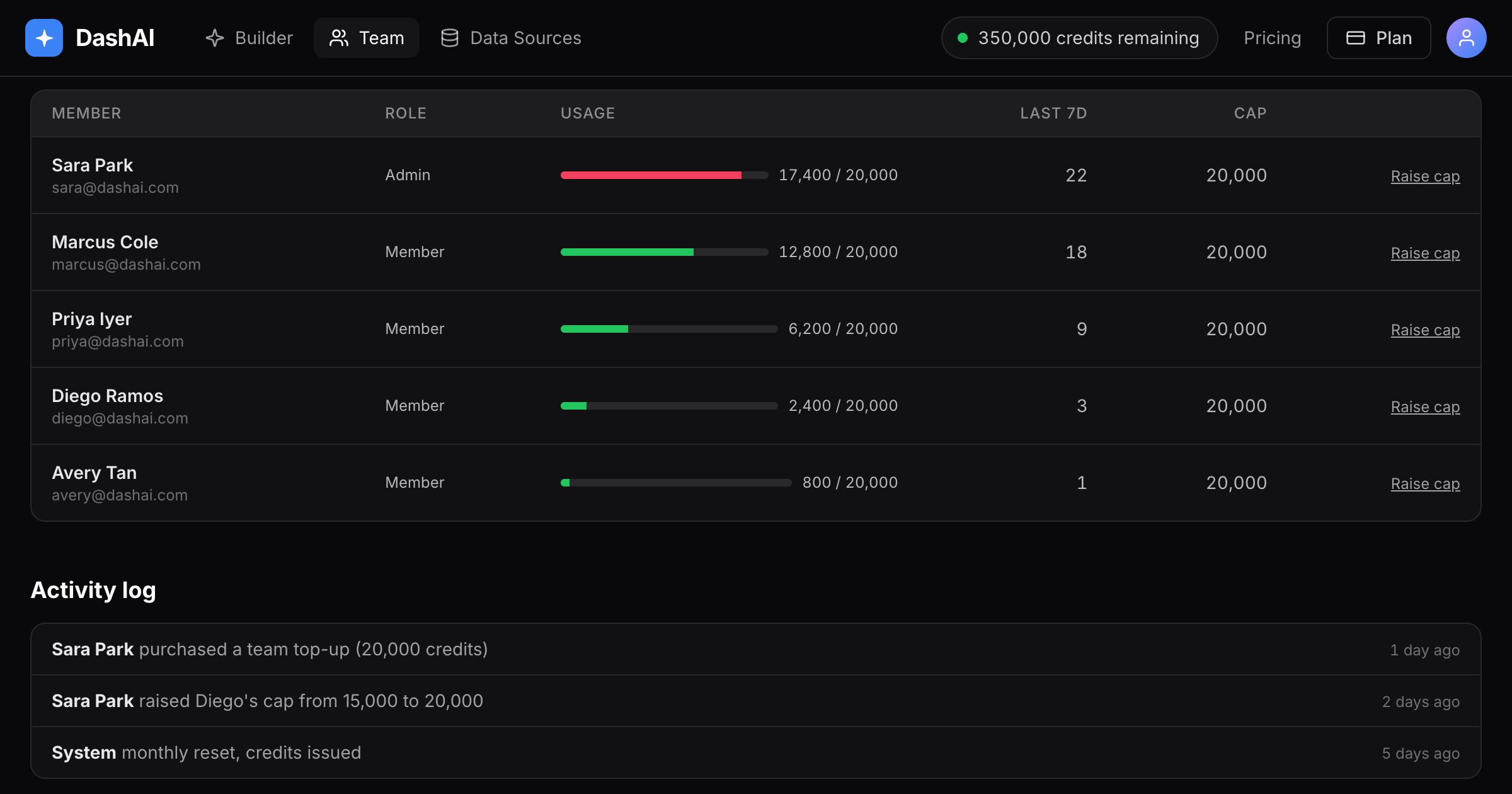
Admin controls for teams and orgs. Per-member usage, per-member caps, team-wide top-ups, audit log. Plus negotiated contracts that ramp credit allotment up over the life of the deal.
What it unlocks
The capabilities this puts in front of customers
Per-member visibility. Admins know who's burning credits without asking.
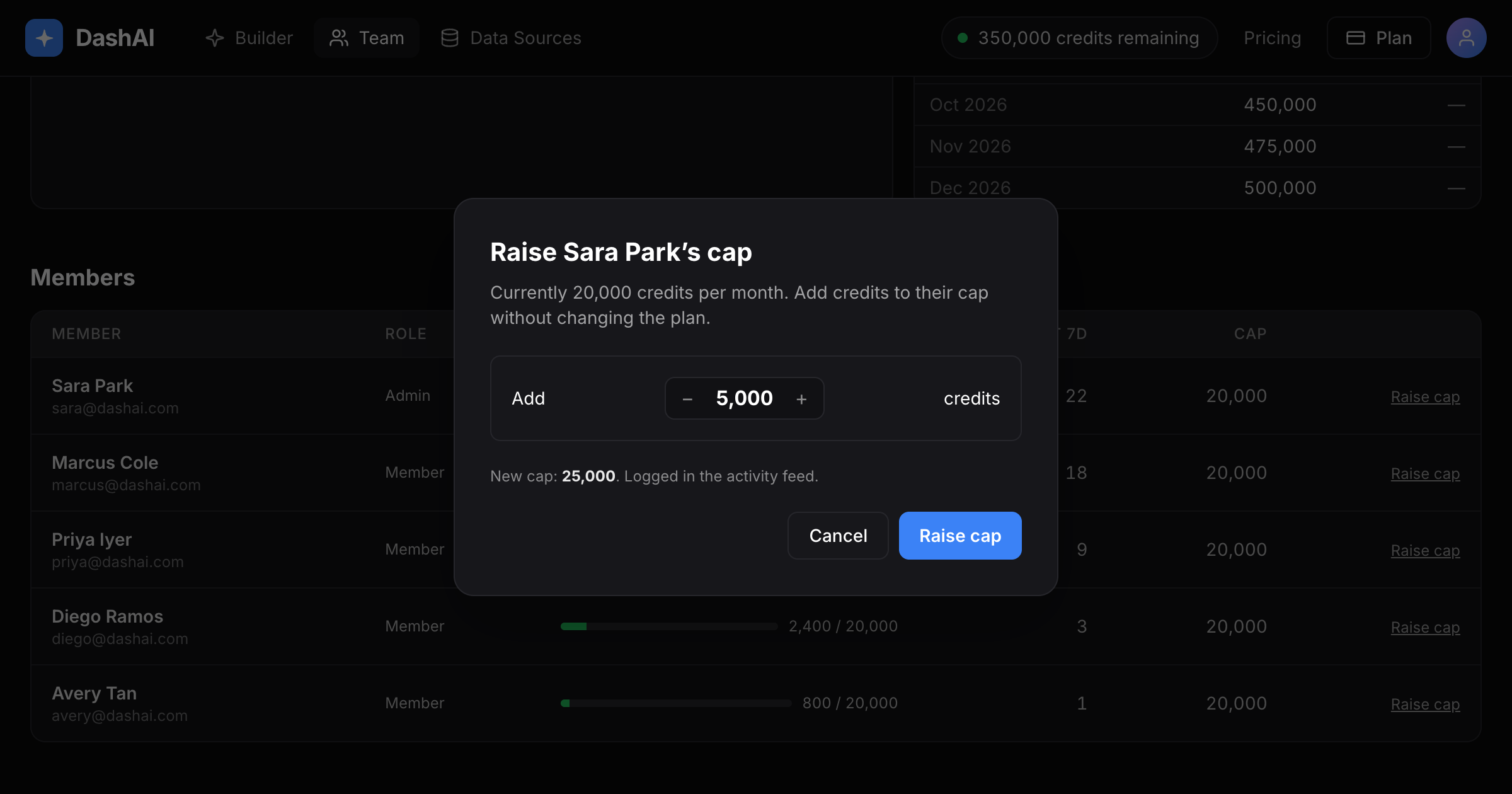
Per-member caps and bumps. One analyst at 87% with a week left gets a discreet cap raise from the admin. No support ticket, no plan change.
Team-wide top-ups that distribute across members. The admin buys, members benefit.
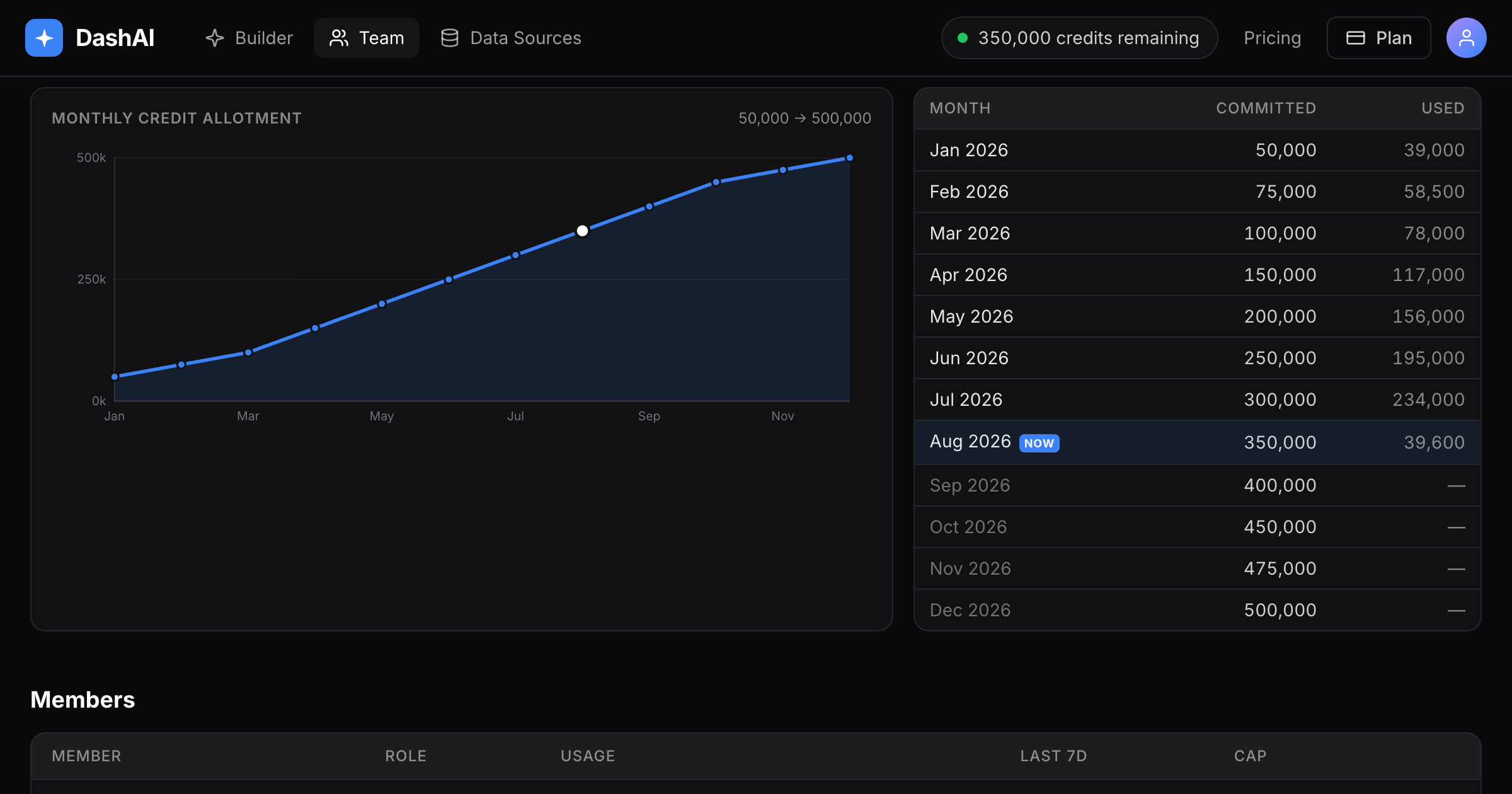
Multi-year contract structuring. Sales negotiates a ramp from 50,000 to 500,000 credits per month over the contract term and the product models it.
Business impact
The metrics this is supposed to move
Enterprise ACV expansion. A contract that ramps from 50,000 to 500,000 credits is 10x expansion baked into the deal at signing.
Reduced sales friction. Today every "we need more credits" goes back to sales. Self-serve caps and top-ups handle the easy ones.
Stickier accounts. Once an org standardizes on Dash AI with custom limits and a known ramp, switching cost climbs sharply.
Cleaner forecasting. Procurement gets a budget commitment. Sales gets a revenue commitment. Both numbers come from the same schedule.
Competitive landscape
How the market runs the play
Snowflake built its enterprise motion on capacity contracts: committed credits, drawn down over the term, with expansion negotiated on renewal.
Databricks sells committed-use agreements the same way. The buyer's procurement team already knows this shape.
OpenAI's enterprise workspaces pair pooled credits with admin dashboards and per-member visibility. The credit-based variant of the Figma pattern.
Figma's Organization plan exposed per-member activity dashboards and it became a major sales driver inside accounts.
Customer mindset
How users actually think about this
Procurement wants forecasting. A multi-year ramp commits them to a budget but caps the surprise. That's what wins the deal.
IT wants control. Who has access, who's using it, how much, and a paper trail.
Manager users want flexibility. "Let me bump Sara without re-negotiating the contract" is a real ask.
Finance wants amortization. A ramp matches typical adoption better than a flat license, which makes the line item easier to defend.
How Schematic supports it
What you don't have to build yourself
Team plan model with per-member entitlements is core Schematic. Members are first-class customer objects under a parent organization.
Per-customer overrides handle the bump-Sara case without a plan change. The override sits on her record and gets enforced at request time.
Contract ramps map to scheduled entitlement changes. Schematic stores the schedule, applies the change automatically at each month boundary.
Audit logging ships with Schematic's audit endpoints. Every cap change, top-up, and override is queryable, which is what enterprise IT needs for SOC 2 evidence.
Walk the flow
Open the prototype to see this strategy in action.