05, Strategy
Referrals
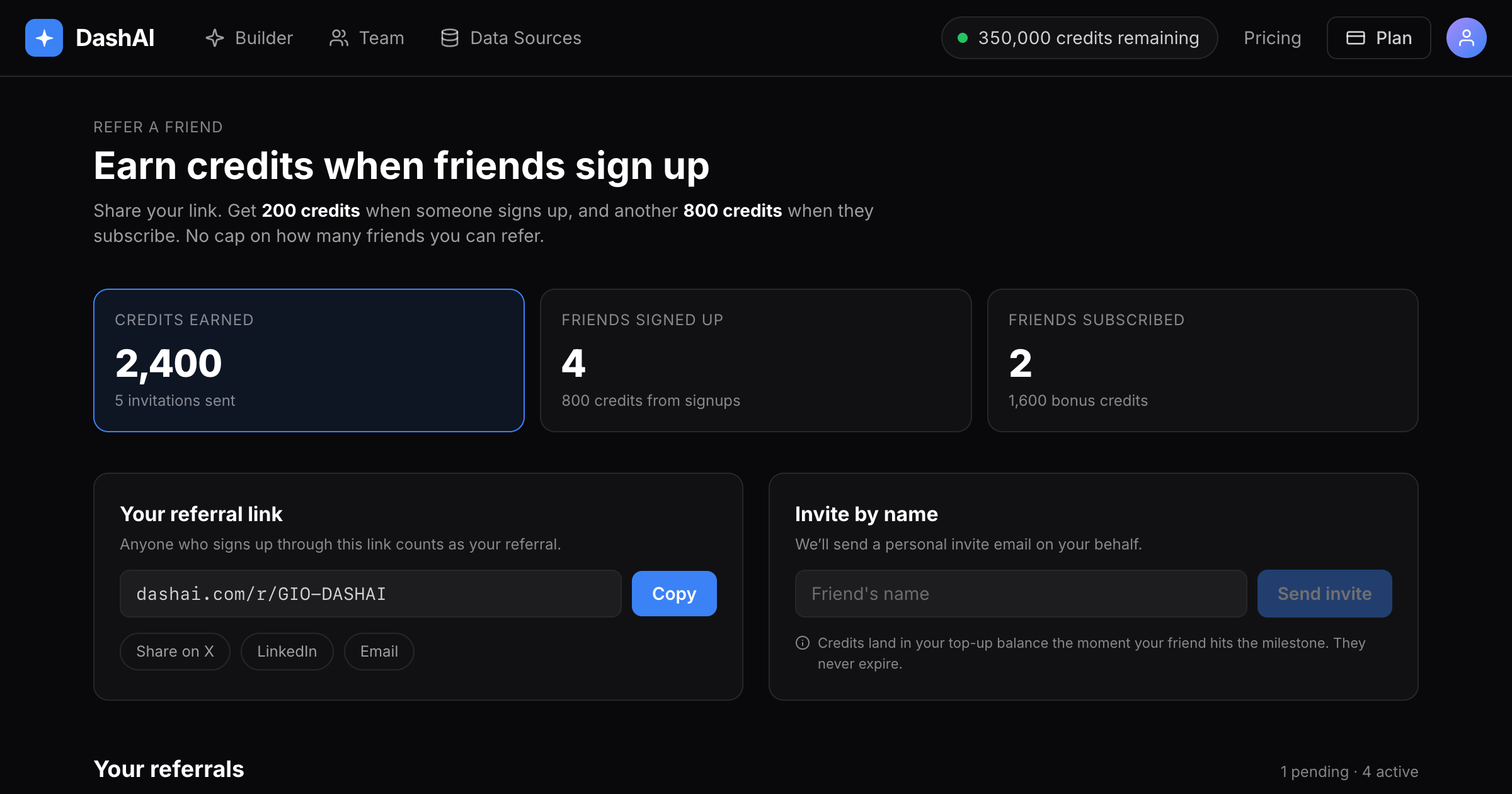
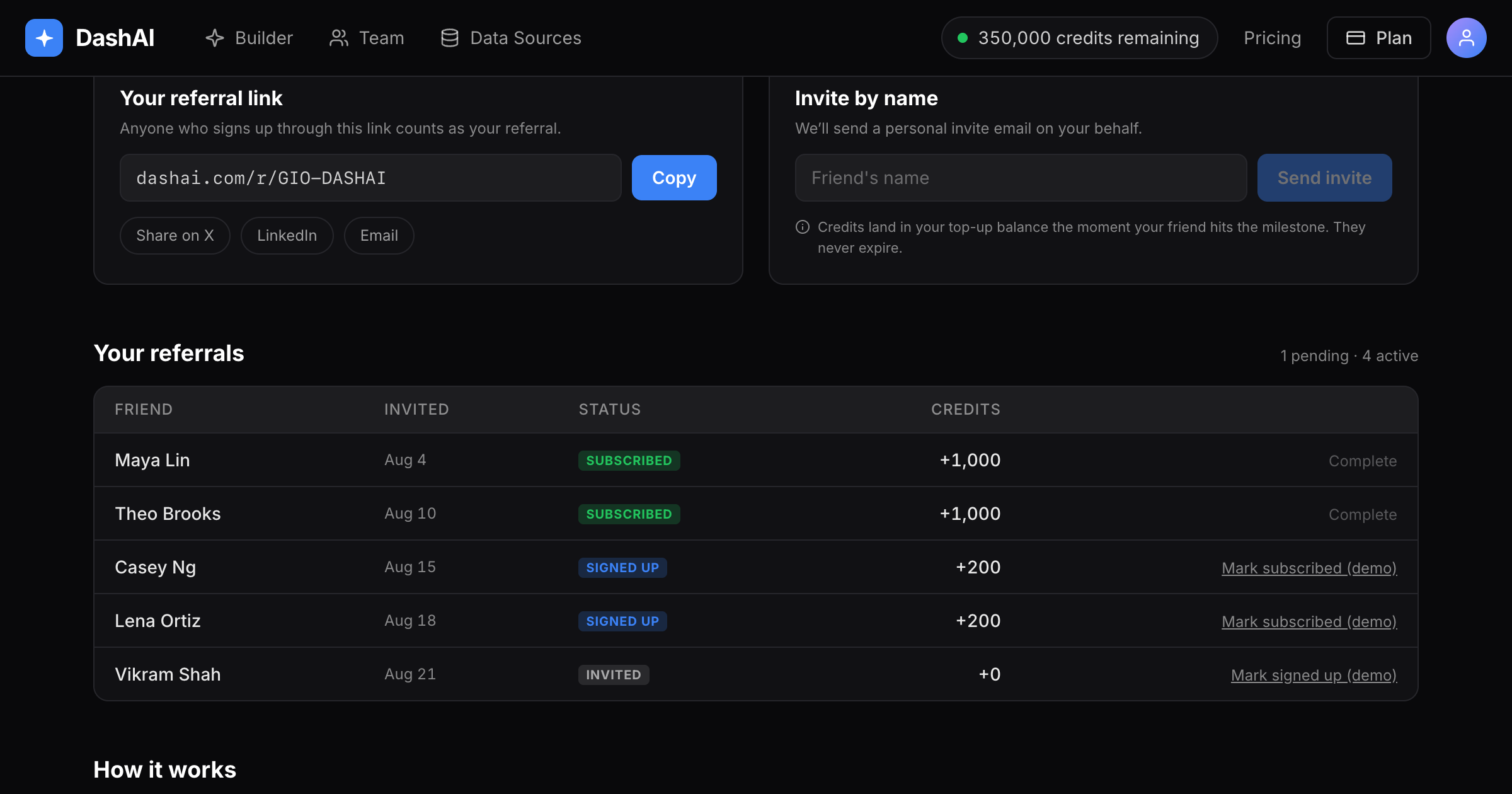
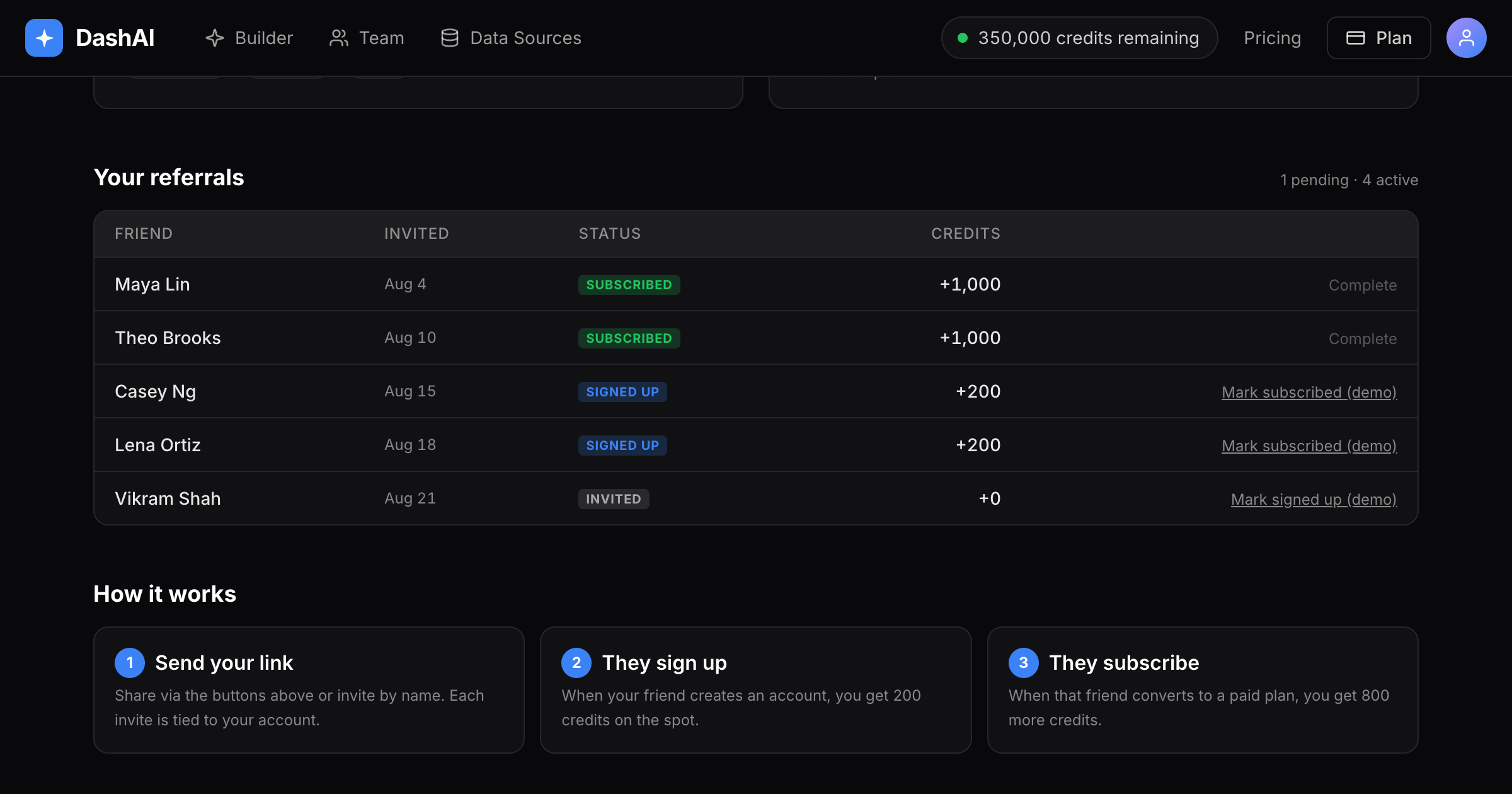
Grant credits for every user referred. Two tiers: 200 credits when the referred user signs up, 1,000 when they subscribe. Word-of-mouth on a credit budget.
What it unlocks
The capabilities this puts in front of customers
A growth channel that scales with the user base. Every paying user can refer.
A natural credit sink. Granted credits get used in product, which keeps engagement up across the whole base, not just the new users.
A self-funding acquisition mechanic. A 200-credit signup reward costs a couple dollars in marginal compute. That's cheaper than any paid channel.
A retention pull. Referrers stay engaged because they're checking their referral page to see who's converted.
Business impact
The metrics this is supposed to move
CAC reduction. 200 credits to a referrer is dramatically cheaper than the equivalent in paid acquisition for a B2B analytics buyer.
LTV lift on referred users. Trust-driven signups retain better than paid-acquisition signups across every benchmark.
Engagement loop. The referrer earns credits, builds more dashboards, shares more, refers more. The whole flywheel speeds up.
A defensive moat. Analysts with vested referral credits don't switch tools casually.
Competitive landscape
How the market runs the play
Dropbox built its growth model on referrals. 500 MB per friend was the canonical example, and 'product currency as reward' started there.
Notion gives account credit for referrals and made it a standard expectation in prosumer SaaS.
Loom rewards referrals with plan upgrades, a more aggressive variant of the same idea.
PayPal-style double-sided rewards are the ceiling: pay both sides in credits and the loop compounds. Credits make that affordable.
Customer mindset
How users actually think about this
"I love this, who else would?" is the moment that matters. The product should be one click from there.
Visible progress beats a single counter. A table showing invited, signed up, and subscribed states gives the referrer a sense of momentum.
Reward clarity wins. "200 credits on signup, 1,000 on subscription" beats "earn credits". Specifics are trusted, generalities are not.
Friction kills referrals. The link should copy with one click. Default invite text should be ready to send.
How Schematic supports it
What you don't have to build yourself
Schematic emits referral attribution events from the SDK. When a referred user converts, Schematic fires a webhook that credits the referrer's account.
Credits-as-entitlements means the referrer's reward shows up in the same balance as plan and top-ups. No separate accounting, no second wallet.
The two-tier structure (signup plus subscription) is two webhook events on Schematic's standard lifecycle. No custom event types.
Reward caps, expiry, and per-customer adjustments live in Schematic's customer-level entitlement overrides for marketing to tune without code changes.
Walk the flow
Open the prototype to see this strategy in action.