02, Strategy
Top ups
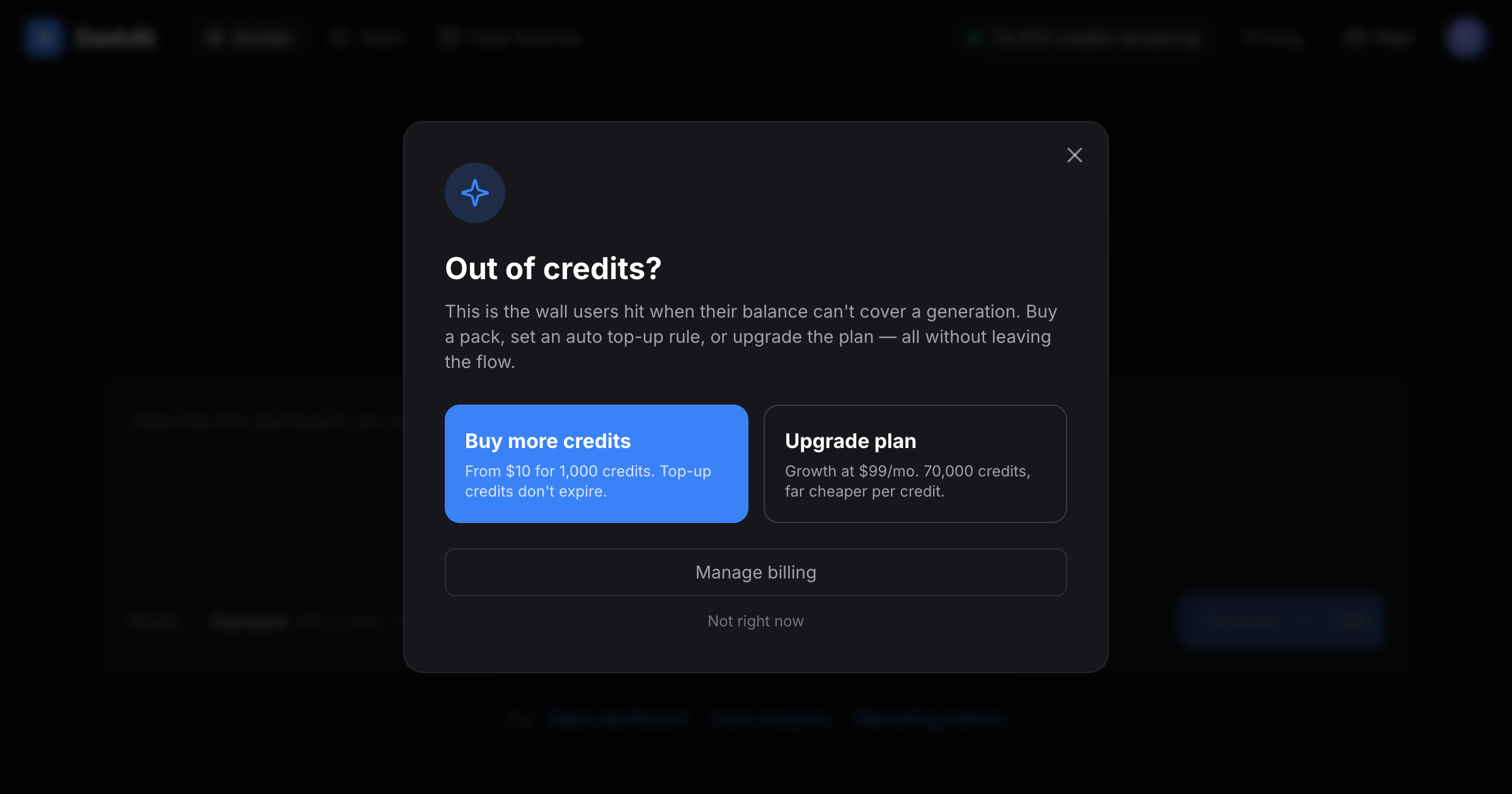
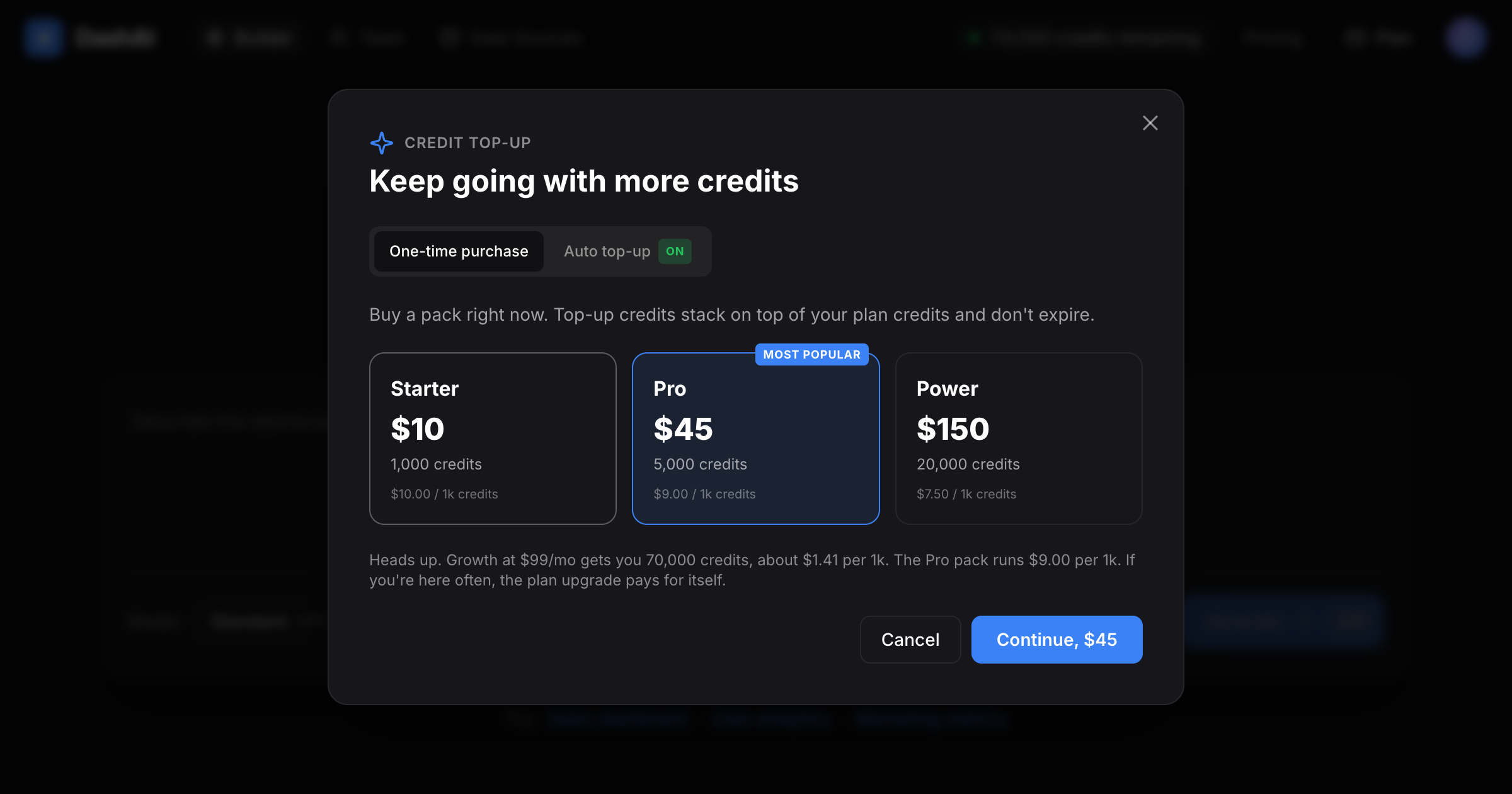
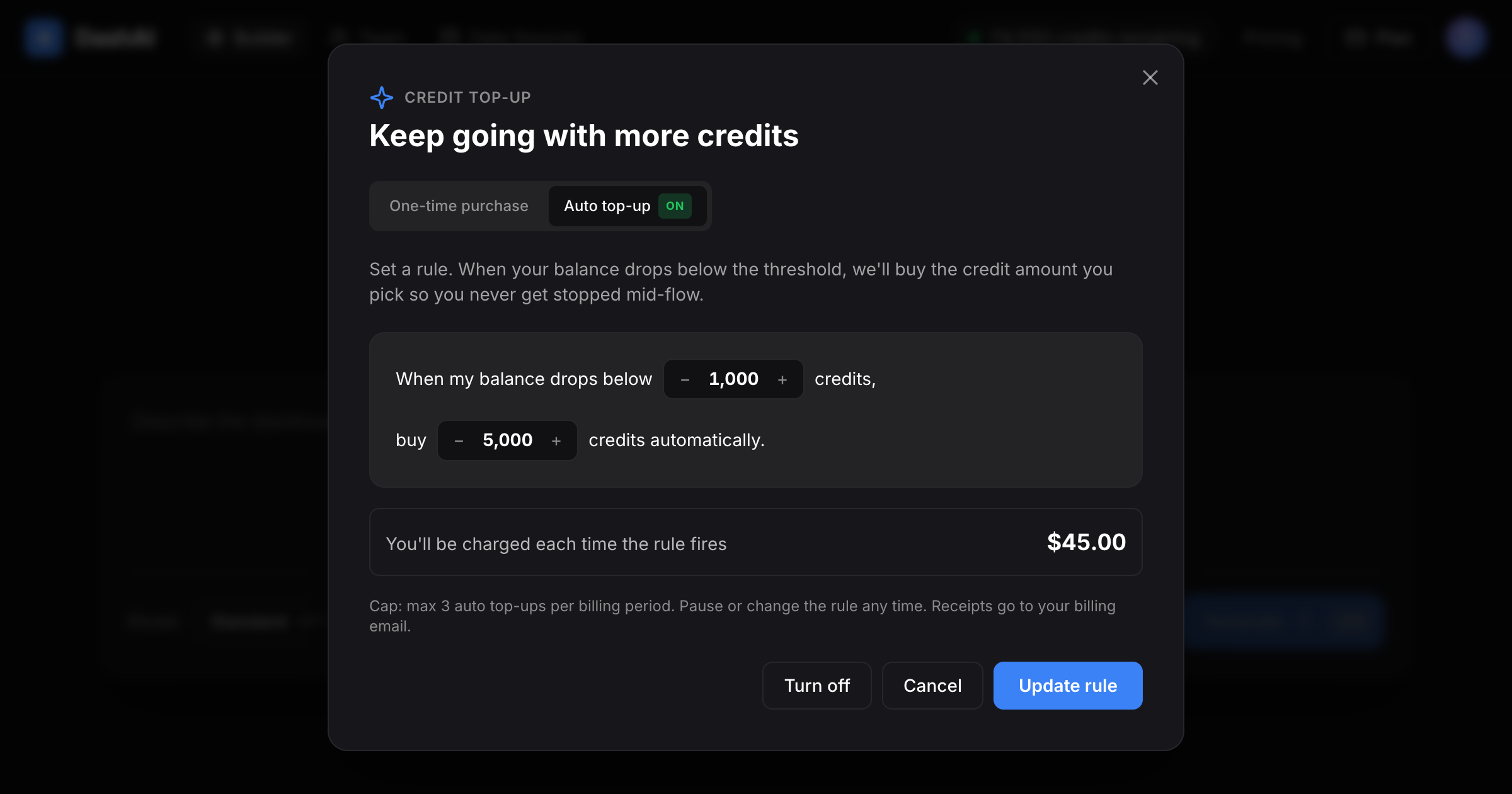
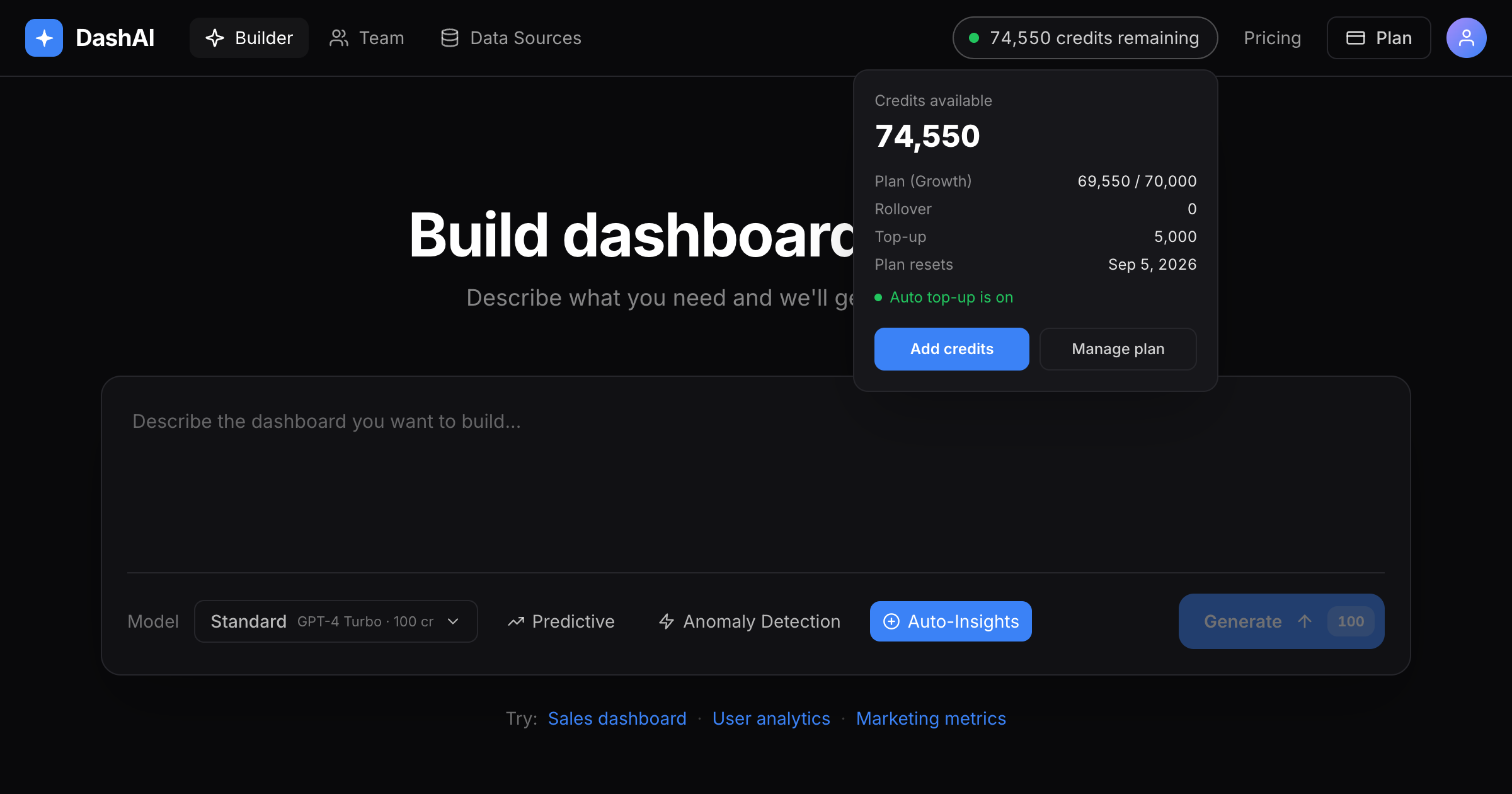
Two ways to add credits without changing plan. Buy a pack now, or set a rule that buys credits automatically when your balance dips.
What it unlocks
The capabilities this puts in front of customers
Self-service expansion. Light users solve a one-time spike for $10 to $150 instead of upgrading to a $99 plan they don't need year-round.
Always-on teams. Auto top-up means an analyst mid-sprint never hits a wall and never breaks flow.
Pricing experimentation that doesn't touch plan tiers. You can A/B pack sizes and per-credit prices without changing the headline plans.
A retention save for the moment users would otherwise cancel. Hitting the wall today means leaving. Hitting it tomorrow means a $10 charge.
Business impact
The metrics this is supposed to move
ARPU lift on Starter and Growth. Users who would have stalled at the limit now spend incrementally to keep going.
Predictable recurring revenue from auto top-up rules. If 10% of paid users set a monthly auto-rule, that's a meaningful tail on top of plan revenue.
Churn reduction. The wall is the moment users rage-cancel. Top-ups make the wall passable.
Lower support load. Today every "we're out of credits" note goes to support or sales. Self-serve top-up removes that lane.
Competitive landscape
How the market runs the play
OpenAI sells API credits as packs and as auto-recharge. Auto-recharge is what made the long tail of small developers workable.
Anthropic's console works the same way: prepaid credits plus an auto-reload threshold. The pattern is now table stakes for AI infrastructure.
Cursor lets users keep going on usage-based pricing after their plan allowance runs out. Power users happily pay through the ceiling.
Vercel and Zapier both sell on-demand capacity on top of plans. Buyers already understand overage-as-a-purchase, not overage-as-a-penalty.
Customer mindset
How users actually think about this
"Can I solve this today without changing my plan?" is the real question. Top-ups answer it.
Auto top-up is anxiety reduction. Once you set the rule you never think about it again, which is exactly what teams with reporting deadlines want.
Per-credit price matters less than the smallest pack price. $10 to keep going is an easier yes than $99 to upgrade.
Receipt clarity matters. Each top-up should land as a discrete line item, not a mystery charge.
How Schematic supports it
What you don't have to build yourself
Schematic handles SKU variants natively. Three top-up packs map to the same underlying entitlement (credits) and stack without bespoke logic.
The auto top-up rule lives on the customer record as a metered-event-triggered automation. When usage crosses the threshold, Schematic fires a webhook and your billing system charges the card.
Per-pack pricing A/B runs through Schematic's pricing experiments. You can test the $10 entry-point pack at multiple price points without touching production billing.
Stripe integration means top-up charges land as discrete invoices, which keeps revenue accounting clean and gives the user the receipts they expect.
Walk the flow
Open the prototype to see this strategy in action.